




The Problem With Radio Isn’t the Audience. It’s the Strategy.
After this week’s discussion about radio’s future—especially its powerful position in the car—it’s clear the industry isn’t disappearing.
It’s evolving.
Radio’s future will belong to stations that combine what they’ve always done well—local connection, trusted personalities, and immediacy—with the digital tools audiences now expect.
This bears repeating.
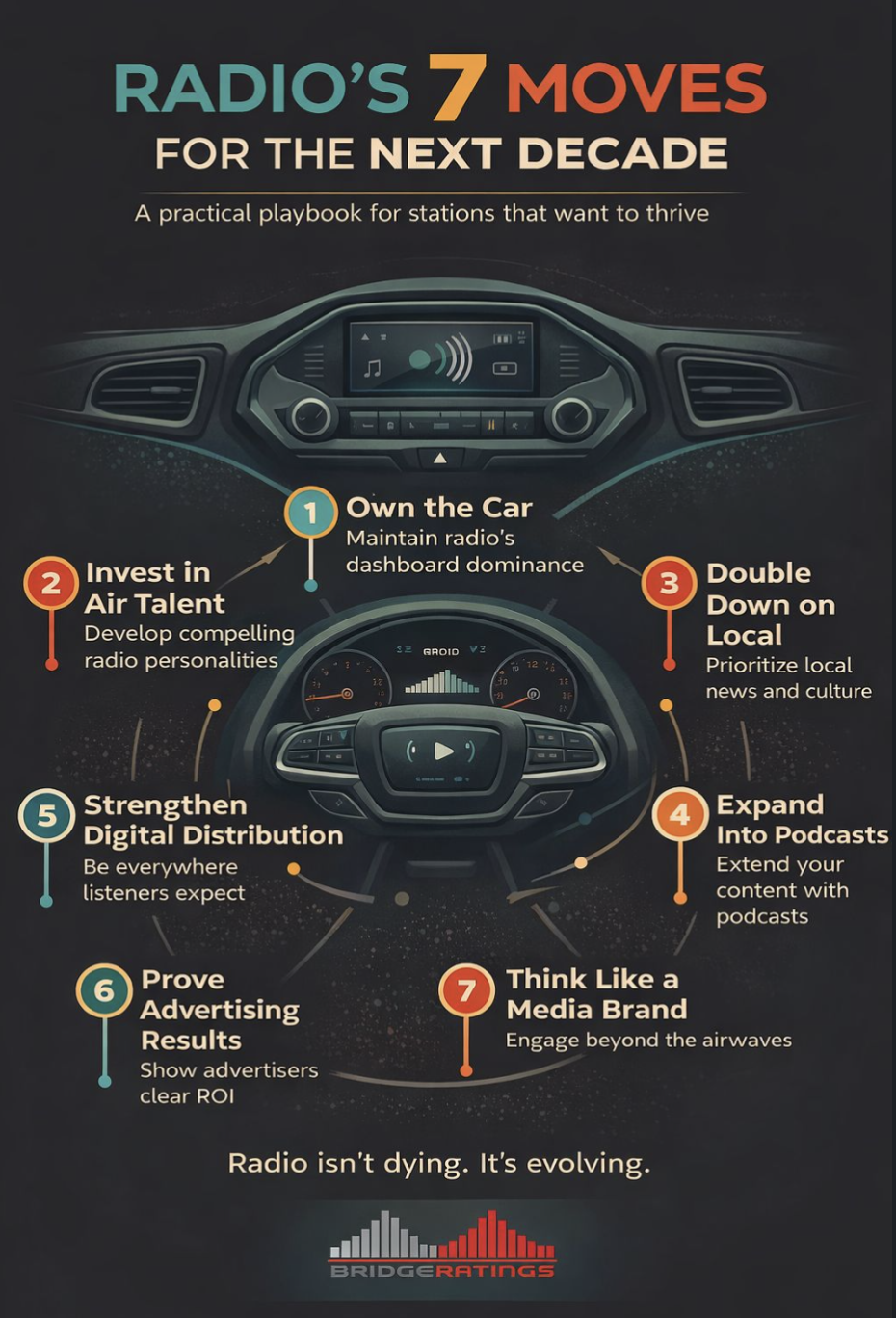
Here’s a practical 7-point plan for radio leaders who want to win the next decade.
1. Own the Car Experience
Radio’s biggest competitive advantage remains the dashboard. As automakers redesign infotainment systems, radio must ensure it stays easy to access, visible, and integrated with digital features. Stations should also create “drive-friendly” content: quick information, personality interaction, and local relevance that fits how people listen while commuting.
2. Invest in Air Talent
Algorithms can deliver songs, but they can’t deliver personality. Great air talent creates habit and emotional connection. Stations that prioritize coaching, development, and creative freedom for their personalities will stand out in a world of automated playlists.
3. Double Down on Local
Local information is radio’s most defensible advantage. Weather, traffic, community events, local culture, and neighborhood conversations cannot be replicated by national streaming platforms. Stations should become the daily soundtrack of their city—not just a jukebox.
4. Expand Aggressively Into Podcasting
Podcasting shouldn’t be viewed as competition. It’s an extension of radio’s storytelling and personality strengths. Smart stations are using podcasts to deepen engagement with listeners and extend their brand beyond the broadcast clock.
5. Build Strong Digital Distribution
Listeners increasingly expect access everywhere: smart speakers, mobile apps, connected cars, and social platforms. Stations must ensure their streams are easy to find and frictionless to use wherever audiences choose to listen.
6. Improve Advertising Attribution
Radio’s biggest revenue opportunity lies in proving its effectiveness. With better use of digital analytics, promo codes, and attribution tools, stations can demonstrate measurable results to advertisers and compete more effectively with digital platforms.
7. Think Like a Media Brand, Not Just a Radio Station
The most successful operators will stop thinking in terms of transmitters and start thinking in terms of audiences. A station’s brand should live across broadcast, social media, podcasts, events, and digital platforms. The more places listeners encounter your brand, the stronger your relationship with them becomes.
Radio’s story is one of transition.
The stations that succeed will be the ones that protect radio’s traditional strengths while embracing the tools of modern media.
The future of radio isn’t just on the dial anymore.
It’s everywhere the audience is.