



The Power of a Yes
We asked 3 artists, “What is a song one programmer believed in before anyone else? How did it help shape the industry?” Here are their answers…
Peter Burton – Where Would I Be
I’ll never forget the moment I got the call from my team that my debut radio single was officially added to the radio. I was a brand new artist, with not much to my name other than a song I believed in. It turns out someone else did too, sooner than I expected.
Tony Weir out in OKC took a chance on a brand new artist and a song he believed in. I can still go back to that day as I sat in my truck listening to the radio. As the song played, I had no idea if this would be the only time I would ever hear the song on air or if others would maybe see his belief and follow along. Either way, I was forever grateful for Tony and the moment I got to experience.
Little did we know that the same song would become a 9-week No. 1 debut radio single and that it would change my life. Early belief is a gift that comes with the blessing of knowing someone else was willing to take a chance on you and give you a shot in an industry that’s more difficult than ever to step into.
Thank you, Tony, for taking that chance. And thank you to everyone who took this song to the top of the charts. But most importantly, thank You, Jesus, for doing what only You can do!
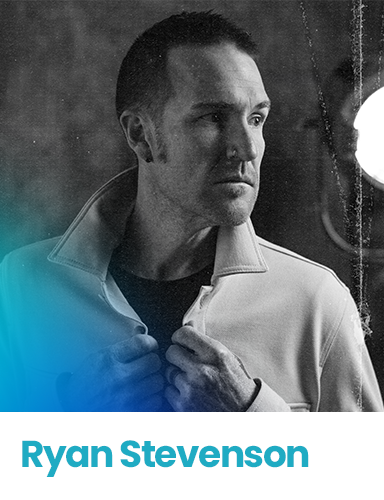
Ryan Stevenson – Eye of the Storm
When I wrote Eye of the Storm, I was writing about life experiences that were happening in real time. Every word of that song was either something I was personally living through or something someone close to me was experiencing. There’s a line in the song that says, “when addiction steals my baby girl, and there’s nothing I can do.” That line was inspired by a close friend whose young daughter was suffering from a severe heroin addiction. During a conversation over lunch, he told me that his baby girl—who was 21 years old—was in and out of rehab, living on and off the streets, and simply couldn’t overcome her addiction. He was weeping as he talked, coming to terms with the heartbreaking reality that his daughter was going to die. Although he would have done anything to save her, he was realizing there was nothing he could do.
From the record label’s perspective, we already believed we had our Christian radio singles on the album, so I felt no pressure to make Eye of the Storm into something that fit the format. Having grown up singing hymns in church, I wanted to write my own modern-day hymn—gritty, stomp-and-clap, with lyrics that were raw, honest, and true to real life. After years of serving as a paramedic and witnessing people in the middle of real tragedy, I felt a freedom—and even a responsibility—to speak about what people were actually going through. I felt many songs were intentionally vague (“what happens to vagueness stays in vagueness”), and there was a significant absence of songs addressing the real issues families across America face every day.
With lyrics about betrayal, addiction, shattered dreams, and financial collapse, Eye of the Storm was anything but vague. That honesty ultimately led to an alternate “radio edit.” My team believed we needed to soften some of the language because, as they put it, “we don’t want to give anyone a reason not to play it.” Ironically, the biggest criticism I’ve received over the years has been from my own audience, asking why I changed the lyrics. Countless people have shared stories with me about children they lost to addiction and expressed disappointment that those lyrics were altered. Hearing those testimonies from exhausted, grieving parents has always been difficult, and it continually reminds me of the importance of never compromising the message.
The first person in my inner circle that I shared the song with was Toby, who immediately said, “This is a single.” He was the very first person to truly believe in it and champion it after hearing nothing more than a simple work tape that I texted him.
When we released the song to Christian radio, almost no one played it. There was, however, one program director who believed in it from the beginning and immediately added it to his station. His name was Rick Stevens at KYTT in Coos Bay. His support gave the song a chance to find real people.
Rick reminded me that one person willing to take a chance can completely change the trajectory of someone’s life—not just the direction of a career. His immediate support demonstrated what leadership and courage look like: a willingness to champion a song and a voice he believed in, even when no one else did. He wasn’t waiting for research or testing. He wasn’t looking for validation from something that had already proven itself. Rick simply led.
That one radio add slowly became more. Over time, it turned into a closed-out panel, a 19-week No. 1 song, and ultimately a Platinum record. It all started because one person had the courage to believe.
Chris Cleveland of Stars Go Dim – Holy
I’m so grateful for my friend, Sarah Taylor at KCMS in Seattle, for being the first programmer to add my song, “Holy!” It’s never lost on me how important our partnerships are on every song, and I’m so grateful for every single time any of you all partner with us and play any of our songs. Because of her early support, so many more of you have had the confidence to take a chance on this song, and it’s been so wonderful to get the positive feedback from across the country about how “Holy” is impacting your listeners.
So, thank you to all of you for over a decade of partnership, and thank you to Sarah for her willingness to lead on this song. I’m looking forward to many more years of partnership in ministry together! Until then, I’m so grateful to sing Holy, Holy, Holy with all of you now just as we will one day in Heaven. God bless y’all!